
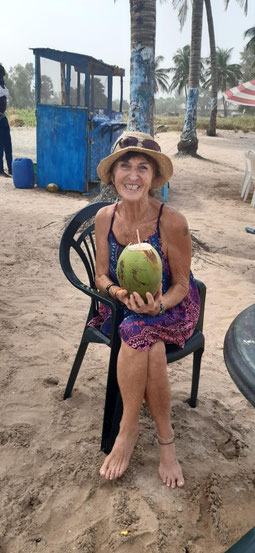
Gambia - The smiling Coast of Africa
Ein Land mit freundlichen Menschen, entspannter Atmosphäre und herzlicher Gastfreundschaft
Du wirst begrüßt mit (Wolof- Landessprache) Nanga def -Wie geht es Dir? How are you?
Deine freundliche Antwort wäre : Mangi fi rekk oder Mangi fi, jamm rekk (Wolof) Geht mir gut - Friede sei mit Dir
Eine sehr häufige Sprache (Dialekt) ist auch Mandinka - Gruß: I be di Wier geht es Dir ? How are you?
Freundliche Antwort wäre: Tanante baa
Erkunde mit mir auf dem lokalen Weg dieses gastfreundlichen Landes
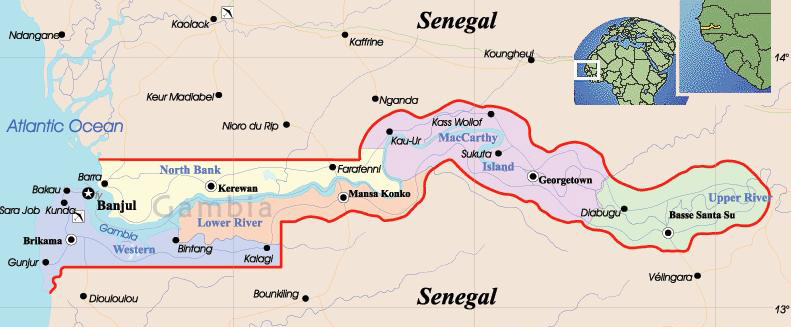
Gambia ist ein kleines, aber faszinierendes Land in Westafrika, das sich wie ein schmaler Streifen entlang des Gambia-Fluss erstreckt. Fast vollständig von Senegal umgeben, besitzt es nur einen kurzen Zugang zum Atlantischen Ozean. Trotz seiner geringen Größe bietet Gambia eine bemerkenswerte Vielfalt an Landschaften, Kulturen und Geschichte.
Die Hauptstadt Banjul liegt an der Mündung des Flusses und bildet das politische Zentrum des Landes. Größere Städte wie Serekunda sind wirtschaftlich bedeutend und dichter besiedelt. Die Bevölkerung Gambias setzt sich aus verschiedenen ethnischen Gruppen zusammen, darunter Mandinka, Wolof und Fula, die jeweils eigene Sprachen und Traditionen pflegen. Englisch dient als Amtssprache und erleichtert die Verständigung im Alltag sowie im internationalen Austausch.
Historisch war Gambia eng mit dem transatlantischen Sklavenhandel verbunden. Ein bedeutendes Zeugnis dieser Zeit ist die Insel Kunta Kinteh Island, die heute zum UNESCO-Weltkulturerbe gehört und an die Vergangenheit erinnert. Nach der Unabhängigkeit von Großbritannien im Jahr 1965 entwickelte sich das Land politisch weiter, durchlief jedoch auch autoritäre Phasen, bevor es in jüngerer Zeit demokratische Reformen erlebte.
Die Wirtschaft Gambias basiert vor allem auf Landwirtschaft, Fischerei und Tourismus. Besonders der Anbau von Erdnüssen spielt eine wichtige Rolle im Export. Gleichzeitig zieht das Land viele Besucher an, die die kilometerlangen Sandstrände, das warme Klima und die reiche Tierwelt genießen möchten. Naturreservate wie das Abuko Nature Reserve bieten Einblicke in die vielfältige Flora und Fauna, insbesondere für Vogelbeobachter.
Kulturell ist Gambia stark von islamischen Traditionen geprägt, da der Großteil der Bevölkerung muslimischen Glaubens ist. Musik, Tanz und mündlich überlieferte Geschichten sind zentrale Bestandteile des gesellschaftlichen Lebens. Die Menschen gelten als besonders gastfreundlich, was dem Land den Beinamen „The Smiling Coast of Africa“ eingebracht hat.
Insgesamt vereint Gambia auf kleinem Raum eine reiche Geschichte, kulturelle Vielfalt und beeindruckende Natur. Gerade diese Kombination macht das Land zu einem interessanten Ziel – sowohl für Reisende als auch für alle, die mehr über Westafrika erfahren möchten.
Gambia is a small but fascinating country in West Africa, stretching like a narrow strip along the Gambia River. Almost entirely surrounded by Senegal, it has only a short stretch of coastline on the Atlantic Ocean. Despite its small size, Gambia boasts a remarkable diversity of landscapes, cultures, and history.
The capital, Banjul, lies at the mouth of the river and serves as the country's political center. Larger cities like Serekunda are economically important and more densely populated. Gambia's population comprises various ethnic groups, including Mandinka, Wolof, and Fula, each with its own distinct languages and traditions. English is the official language, facilitating communication in daily life and international exchange.
Historically, Gambia was closely linked to the transatlantic slave trade. A significant testament to this era is Kunta Kinteh Island, now a UNESCO World Heritage Site, which serves as a reminder of the past. Following its independence from Great Britain in 1965, the country continued its political development, though it also experienced periods of authoritarianism before undergoing more recent democratic reforms.
The Gambia's economy is primarily based on agriculture, fishing, and tourism. Peanut cultivation plays a particularly important role in exports. At the same time, the country attracts many visitors who come to enjoy its miles of sandy beaches, warm climate, and abundant wildlife. Nature reserves such as the Abuko Nature Reserve offer insights into the diverse flora and fauna, especially for birdwatchers.
Culturally, The Gambia is strongly influenced by Islamic traditions, as the majority of the population is Muslim. Music, dance, and oral storytelling are central to social life. The people are known for their exceptional hospitality, earning the country the nickname "The Smiling Coast of Africa."
Overall, The Gambia combines a rich history, cultural diversity, and stunning natural beauty within a relatively small area. It is precisely this combination that makes the country an interesting destination – both for travelers and for anyone who wants to learn more about West Africa.
Reiseangebot - kann erfragt werden - Details coming soon
for more Information don´t hesitate to ask me